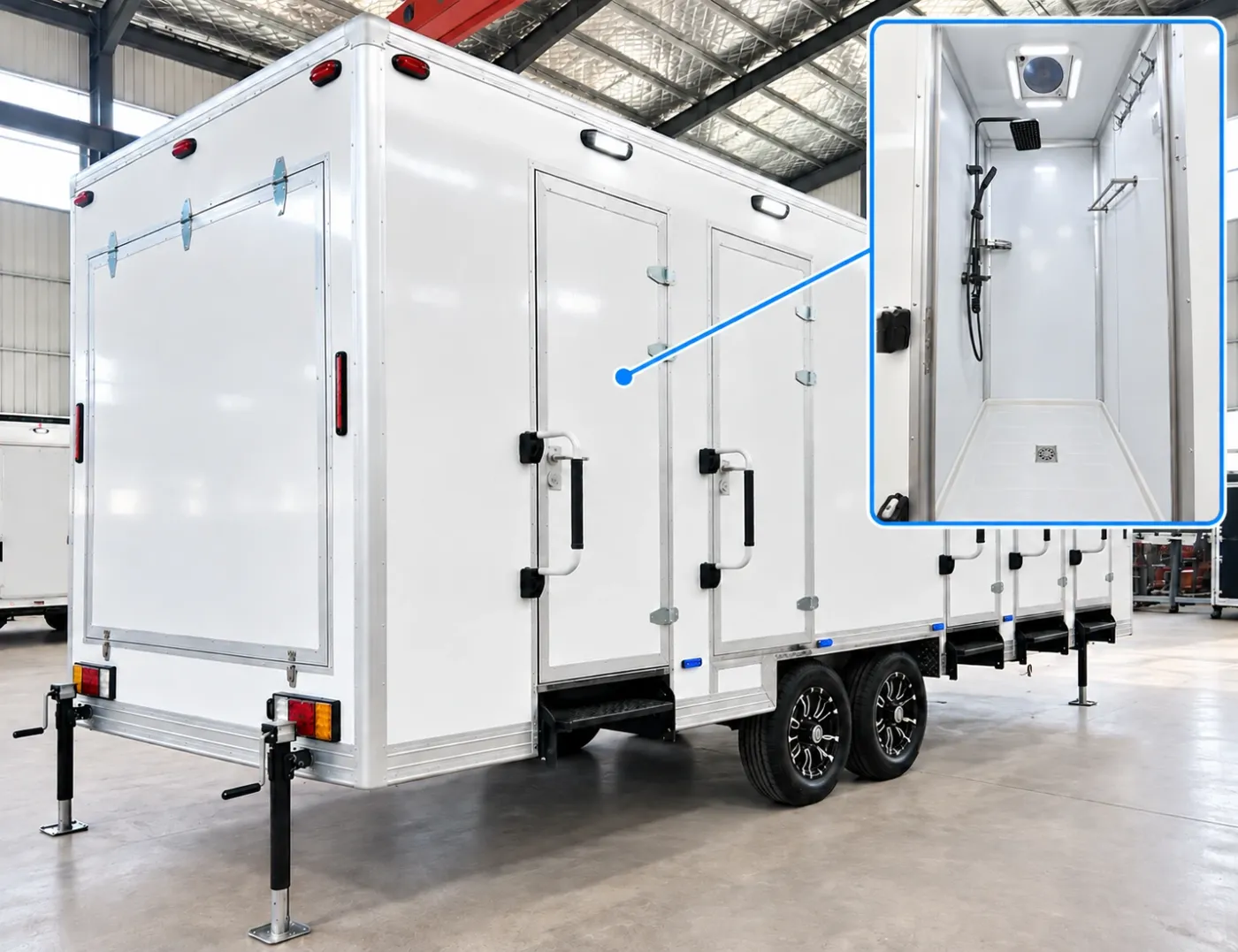
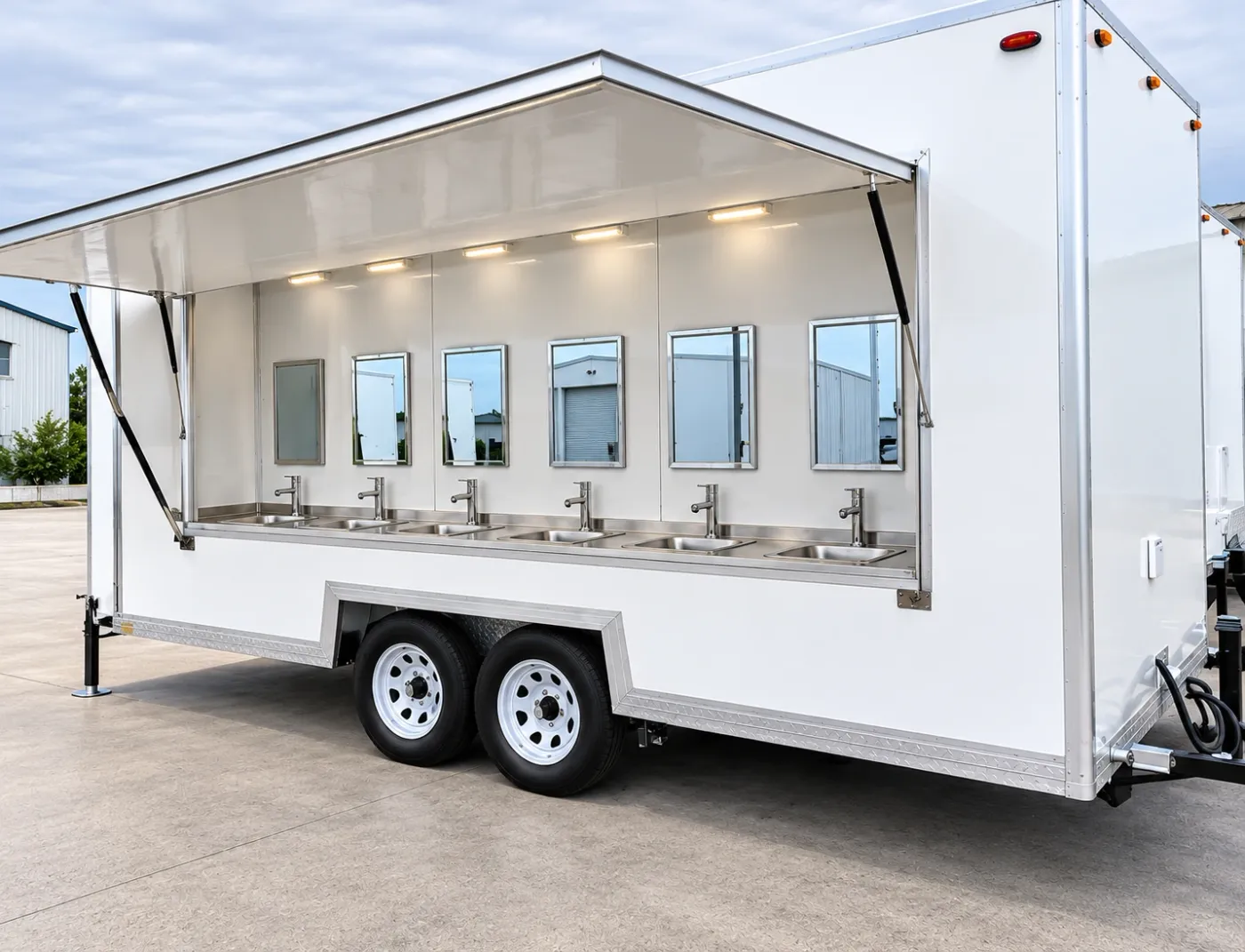
Rental guide · Updated 2026-11-06
Shower Trailer Utilities for Remote New Jersey Sites: Water, Power, and Wastewater
Hookups a shower trailer needs, and how to supply them where a remote site has none.
Key points
- Every shower trailer needs fresh water, power, and a place for wastewater to go.
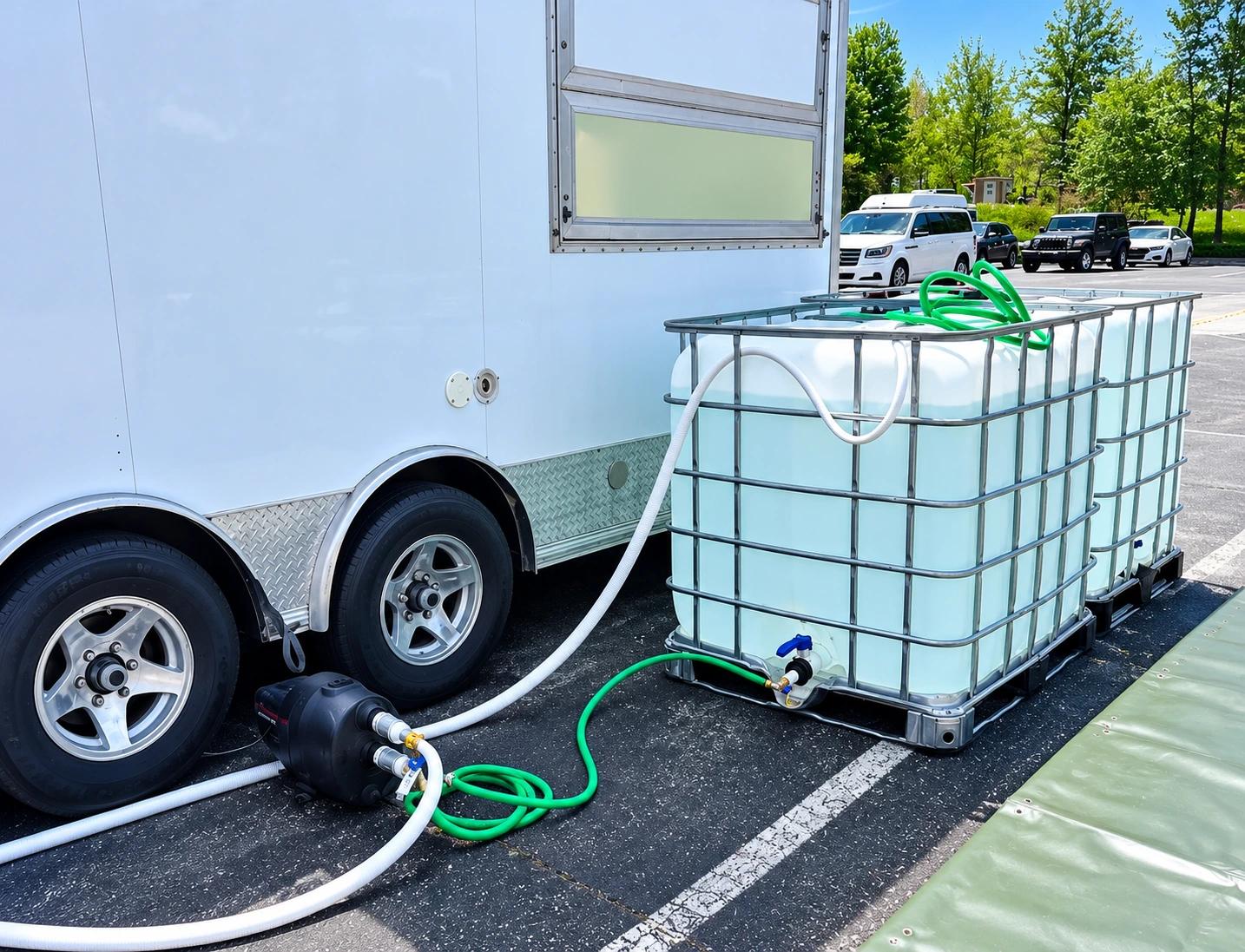
- Remote sites use water tanks, a generator, and scheduled pump-outs.
- Temporary or remote camps should check New Jersey's campground sanitation guidance with the local health officer.
Much of a temporary site in the pines, on a farm, or at a solar or pipeline job has no water line. A shower trailer still works there with planned utilities.
The three hookups
- Fresh water: a hose connection to a potable supply, or water tanks refilled on a schedule.
- Power: shore power or a generator sized for the water heaters; we confirm it for the unit you choose.
- Wastewater: a sewer or septic connection, or a holding tank with pump-outs.
Hot water is not optional: where showers are required, 29 CFR 1910.141 calls for hot and cold water feeding a common discharge line.
Remote and temporary camps
The NJ Department of Health lists Sanitary Campground Guidance (2023) among its general sanitation resources. If crews will sleep on site in a remote camp, ask your local health officer which standards apply, and plan showers, restrooms, and handwashing together.
Send photos of the site and we quote the trailer with any tanks, generator, and pump-outs it needs.
Sources
- OSHA 29 CFR 1910.141: Sanitation (general industry): Where a standard requires showers: one shower for each 10 employees of each sex required to shower during the same shift, hot and cold water, soap, and individual clean towels.
- NJ Department of Health: General sanitation resources: Includes the state's Sanitary Campground Guidance (2023) on sanitary standards and occupancy for campgrounds, plus solid waste and medical waste resources.
Links checked 2026-11-06. Figures quoted above appear on the linked pages.